Acalypha capitata
Acalypha capitata · Accepted scientific name
Scientific literature: Very Sparse (10 studies) · ★☆☆☆☆
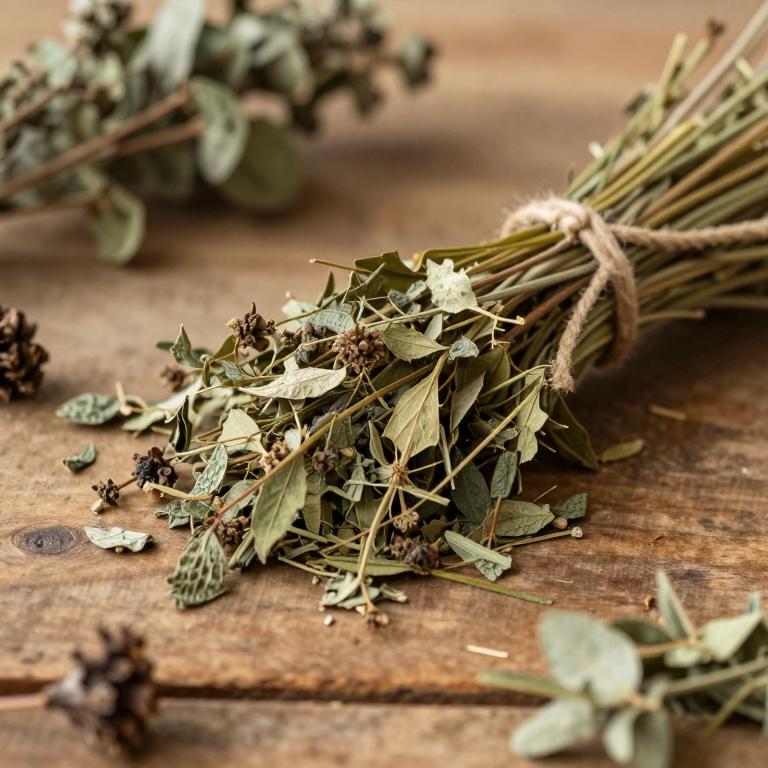
Acalypha capitate, scientifically known as Acalypha capitate, is a versatile medicinal plant cherished in traditional healing practices. Renowned for its therapeutic properties, it is frequently utilized to treat skin ailments, inflammation, and digestive issues. This resilient species offers a natural resource for holistic wellness and herbal pharmacology.
- Family
- Euphorbiaceae
- Native range
- Asia-Tropical
- Parts used
- Not available
- Common names
- Not available
- Scientific synonyms
- Ricinocarpus Capitatus · Ricinocarpus Alnifolius · 1 more
Names and Synonyms
Scientific Names
Accepted name
Acalypha capitataSynonyms
- Ricinocarpus capitatus
- Ricinocarpus alnifolius
- Acalypha capitata var. ambigua
Sources: Wikidata
Taxonomical Classification
This plant belongs to the kingdom Plantae and the phylum Streptophyta, falling under the class Equisetopsida and subclass Magnoliidae. Within the order Malpighiales, it is classified under the family Euphorbiaceae and the genus Acalypha.
| Rank | Classification |
|---|---|
| Kingdom | Plantae |
| Phylum | Streptophyta |
| Class | Equisetopsida |
| Subclass | Magnoliidae |
| Order | Malpighiales |
| Family | Euphorbiaceae |
| Genus | Acalypha |
Sources: The World Checklist of Vascular Plants (WCVP)
Distribution
This plant, known scientifically as Acalypha capitate, possesses a specific and localized geographical range. Its distribution is primarily centered within the vast expanse of the Indian Subcontinent. Within this region, the species is documented to thrive specifically in the country of India. This indicates that its natural habitat is closely tied to the unique environmental conditions found in the Indian landscape. Consequently, its occurrence is most reliably identified throughout various parts of the Indian territory.
| Region | Area |
|---|---|
| Indian Subcontinent | India |
Sources: The World Checklist of Vascular Plants (WCVP)
Botanical Identification
Life history
The life history of Acalypha capitate is characterized by its specific growth habits and structural classifications, primarily functioning as a phanerophyte, which indicates that its perennating buds are located above the ground level. Within its ecological niche, the plant's developmental strategy may also exhibit characteristics of a nanophanerophyte, reflecting a life form where the woody stems or persistent parts remain relatively low to the ground while still staying above the soil surface. This combination of life forms dictates its survival mechanisms and its ability to endure seasonal variations through its elevated bud placement.
- Life form :
- nanophanerophyte
- Life form :
- phanerophyte
Morphology
The morphology of Acalypha capitate is characterized by a woody growth habit, providing structural rigidity to its stems. As a climber, it functions in a self-supporting manner, utilizing its physical structure to ascend without reliance on external hosts for mechanical support. It is classified as an independent organism, meaning it does not exhibit parasitic behavior toward other plants. Furthermore, it is a terrestrial species, establishing its root system within the soil rather than living as an epiphyte upon other vegetation.
- Climber :
- self-supporting
- Epiphyte :
- terrestrial
- Parasite :
- independent
- Woodiness :
- woody
Sources: Global Inventory of Floras and Traits (GIFT)
Chemicals
Acalypha capitata has 7 reported phytochemicals identified across 0 scientific publications and several other databases. The most consistently reported chemicals include CHLOROFORM, ETHYL ACETATE, Flavonoids, HEXANE, Terpenoids.
| Chemical | Supporting sources | Consensus |
|---|---|---|
| CHLOROFORM | 1 supporting sources | ★☆☆☆☆ |
| ETHYL ACETATE | 1 supporting sources | ★☆☆☆☆ |
| Flavonoids | 1 supporting sources | ★☆☆☆☆ |
| HEXANE | 1 supporting sources | ★☆☆☆☆ |
| Terpenoids | 1 supporting sources | ★☆☆☆☆ |
| acetone | 1 supporting sources | ★☆☆☆☆ |
| methanol | 1 supporting sources | ★☆☆☆☆ |
CHLOROFORM
- Parasitology research
ETHYL ACETATE
- Parasitology research
Flavonoids
- BioMed research international
HEXANE
- Parasitology research
Terpenoids
- BioMed research international
acetone
- Parasitology research
methanol
- Parasitology research
Activities
Acalypha capitata has 3 reported activities identified across 0 scientific publications and several other databases. The most consistently reported activities include Anticholinesterase, Antidiabetic, Antioxidant.
| Activity | Supporting sources | Consensus |
|---|---|---|
| Anticholinesterase | 1 supporting sources | ★☆☆☆☆ |
| Antidiabetic | 1 supporting sources | ★☆☆☆☆ |
| Antioxidant | 1 supporting sources | ★☆☆☆☆ |
Anticholinesterase
- BioMed research international
Antidiabetic
- BioMed research international
Antioxidant
- BioMed research international
Preparations
Acalypha capitata has 1 reported preparations identified across 0 scientific publications and several other databases. The most consistently reported preparations include crude methanolic extracts.
| Preparation | Supporting sources | Consensus |
|---|---|---|
| Crude methanolic extracts | 1 supporting sources | ★☆☆☆☆ |
Crude methanolic extracts
- BioMed research international