Field Copperleaf
Acalypha arvensis · Accepted scientific name
Scientific literature: Very Sparse (14 studies) · ★☆☆☆☆
Field Copperleaf, scientifically known as Acalypha arvensis, is a versatile herbaceous plant belonging to the Euphorbiaceae family. Often found in disturbed soils and grasslands, it holds significant interest in traditional medicine. Its bioactive compounds offer potential therapeutic benefits, particularly for managing inflammation and supporting various healing processes naturally.
- Family
- Euphorbiaceae
- Native range
- Africa
- Parts used
- Not available
- Common names
- Field Copperleaf
- Scientific synonyms
- Ricinocarpus Arvensis · Acalypha Arvensis Var. Belangeri · 3 more
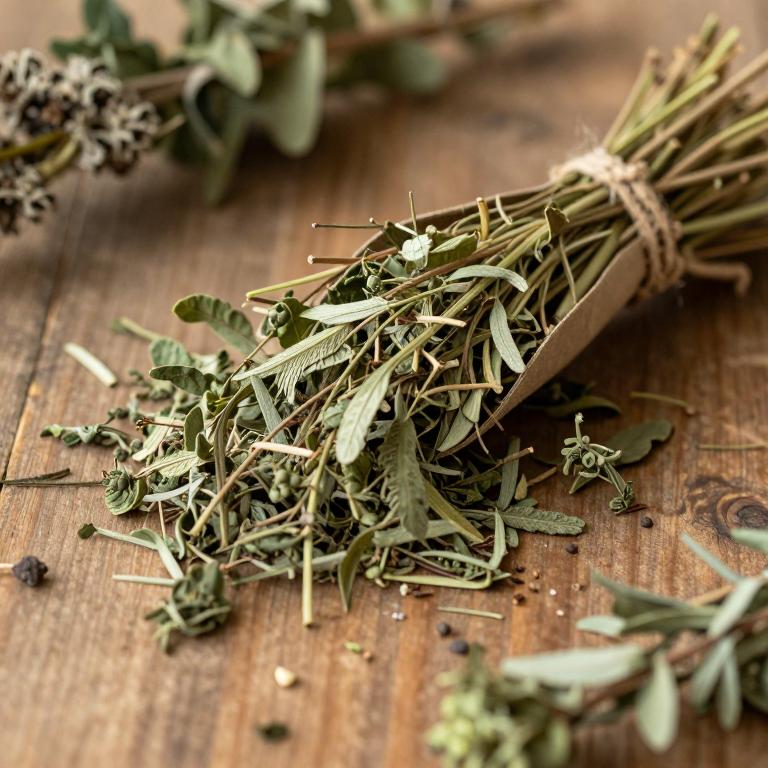
Names and Synonyms
Common Names
- Field Copperleaf
Scientific Names
Accepted name
Acalypha arvensisSynonyms
- Ricinocarpus arvensis
- Acalypha arvensis var. belangeri
- Acalypha arvensis var. pavoniana
- Acalypha capitellata
- Acalypha pavoniana
Regional and Traditional Names
Spanish:
- cordiemiento
- yerba del cáncer
- borreguillo
Sources: Wikidata, Catalogue of Life
Taxonomical Classification
This plant belongs to the kingdom Plantae within the phylum Streptophyta and the class Equisetopsida. As a member of the subclass Magnoliidae and the order Malpighiales, it is further classified under the family Euphorbiaceae. Finally, its taxonomic identity is defined by the genus Acalypha.
| Rank | Classification |
|---|---|
| Kingdom | Plantae |
| Phylum | Streptophyta |
| Class | Equisetopsida |
| Subclass | Magnoliidae |
| Order | Malpighiales |
| Family | Euphorbiaceae |
| Genus | Acalypha |
Sources: The World Checklist of Vascular Plants (WCVP)
Distribution
This plant exhibits a broad and diverse geographical distribution spanning multiple continents and climate zones. In West-Central Tropical Africa, its presence is noted in Cameroon. Its range extends across the ocean to Eastern Asia, specifically within Taiwan. The species is also found in the Malesia region, particularly in Malaya. Finally, its reach includes Mexico Central and the Southeastern United States in Florida.
| Region | Area |
|---|---|
| West-Central Tropical Africa | Cameroon |
| Eastern Asia | Taiwan |
| Malesia | Malaya |
| Southeastern U.S.A. | Florida |
| Mexico | Mexico Central |
| Mexico | Mexico Northeast |
| Mexico | Mexico Gulf |
| Mexico | Mexico Southwest |
| Mexico | Mexico Southeast |
| Central America | Belize |
Sources: The World Checklist of Vascular Plants (WCVP)
Botanical Identification
Ecology
The ecology of Acalypha arvensis is characterized by a broad altitudinal distribution, spanning from sea level up to a maximum elevation of 1800 m AMSL. This species demonstrates significant ecological plasticity, as it is frequently found inhabiting both anthropogenic areas (Área Antrópica) and dense Ombrophilous Forests, which include various types of tropical rainforests (Floresta Ombrófila / Floresta Pluvial). Its ability to thrive in both human-disturbed landscapes and stable, high-moisture forest ecosystems highlights its adaptability to diverse environmental conditions and varying degrees of canopy cover.
- Elevational range max:
- 1800 m AMSL
- Elevational range min:
- 0 m AMSL
- Habitat :
- Área Antrópica, Floresta Ombrófila (= Floresta Pluvial)
Life history
The life history of Acalypha arvensis is characterized by an annual lifecycle, meaning the plant completes its entire biological progression—from seed germination to flowering and subsequent seed production—within a single growing season. As an annual species, it does not persist through multiple years in the same form, instead relying on the rapid production and dispersal of seeds to ensure the survival of the next generation. The process begins with germination in favorable soil conditions, followed by a period of vegetative growth where the plant establishes its stem and foliage. This is followed by a reproductive phase where the plant produces inflorescences, eventually culminating in senescence once the seed set is complete. This rapid, single-season cycle allows the plant to efficiently exploit transient environmental resources and colonize disturbed habitats.
- Lifecycle :
- annual
Morphology
The morphology of Acalypha arvensis is characterized by its growth form as a non-woody herb and specifically a forb, which lacks any woody tissue throughout its structure. This plant is a self-supporting organism, functioning as an independent species that does not act as a parasite or an epiphyte, as it maintains a strictly terrestrial existence. Unlike climbing plants such as vines or lianas, it does not require external support, remaining self-supporting through its own structural integrity. Furthermore, its ecological habit is entirely terrestrial, distinguishing it from aquatic or semiaquatic species.
- Aquatic :
- terrestrial
- Climber :
- self-supporting
- Epiphyte :
- terrestrial
- Growth form :
- herb
- Growth form :
- forb
- Parasite :
- independent
- Woodiness :
- non-woody
Sources: Global Inventory of Floras and Traits (GIFT)
Chemicals
Acalypha arvensis has 8 reported phytochemicals identified across 0 scientific publications and several other databases. The most consistently reported chemicals include CHLOROGENIC ACID, Corilagin, Ellagitannin, Flavonoids, Phenols.
| Chemical | Supporting sources | Consensus |
|---|---|---|
| CHLOROGENIC ACID | 1 supporting sources | ★☆☆☆☆ |
| Corilagin | 1 supporting sources | ★☆☆☆☆ |
| Ellagitannin | 1 supporting sources | ★☆☆☆☆ |
| Flavonoids | 1 supporting sources | ★☆☆☆☆ |
| Phenols | 1 supporting sources | ★☆☆☆☆ |
| Quercetin 3-O-glucoside | 1 supporting sources | ★☆☆☆☆ |
| RUTIN | 1 supporting sources | ★☆☆☆☆ |
| caffeic acid | 1 supporting sources | ★☆☆☆☆ |
CHLOROGENIC ACID
- Plants (Basel, Switzerland)
Corilagin
- Plants (Basel, Switzerland)
Ellagitannin
- Plants (Basel, Switzerland)
Flavonoids
- Plants (Basel, Switzerland)
Phenols
- Plants (Basel, Switzerland)
Quercetin 3-O-glucoside
- Plants (Basel, Switzerland)
RUTIN
- Plants (Basel, Switzerland)
caffeic acid
- Plants (Basel, Switzerland)
Activities
Acalypha arvensis has 1 reported activities identified across 0 scientific publications and several other databases. The most consistently reported activities include Antibacterial.
| Activity | Supporting sources | Consensus |
|---|---|---|
| Antibacterial | 1 supporting sources | ★☆☆☆☆ |
Antibacterial
- Plants (Basel, Switzerland)
Conditions
Acalypha arvensis has 4 reported investigations on conditions identified across 0 scientific publications and several other databases. The most consistently reported conditions include Klebsiella pneumoniae, Pseudomonas aeruginosa, infectious diseases, methicillin-resistant Staphylococcus aureus.
| Condition | Supporting sources | Consensus |
|---|---|---|
| Klebsiella pneumoniae | 1 supporting sources | ★☆☆☆☆ |
| Pseudomonas aeruginosa | 1 supporting sources | ★☆☆☆☆ |
| Infectious diseases | 1 supporting sources | ★☆☆☆☆ |
| Methicillin-resistant staphylococcus aureus | 1 supporting sources | ★☆☆☆☆ |
Klebsiella pneumoniae
- Plants (Basel, Switzerland)
Pseudomonas aeruginosa
- Plants (Basel, Switzerland)
Infectious diseases
- Plants (Basel, Switzerland)
Methicillin-resistant staphylococcus aureus
- Plants (Basel, Switzerland)
Preparations
Acalypha arvensis has 4 reported preparations identified across 0 scientific publications and several other databases. The most consistently reported preparations include ethanol, ethanolic extract, ethyl acetate, n-hexane.
| Preparation | Supporting sources | Consensus |
|---|---|---|
| Ethanol | 1 supporting sources | ★☆☆☆☆ |
| Ethanolic extract | 1 supporting sources | ★☆☆☆☆ |
| Ethyl acetate | 1 supporting sources | ★☆☆☆☆ |
| N-hexane | 1 supporting sources | ★☆☆☆☆ |
Ethanol
- Plants (Basel, Switzerland)
Ethanolic extract
- Plants (Basel, Switzerland)
Ethyl acetate
- Plants (Basel, Switzerland)
N-hexane
- Plants (Basel, Switzerland)