Acaena pinnatifida
Acaena pinnatifida · Accepted scientific name
Scientific literature: Very Sparse (10 studies) · ★☆☆☆☆
Acaena pinnatifida, scientifically known as Acaena pinnatifida, is a distinctive medicinal plant valued for its unique therapeutic properties. Often found in specific ecological niches, this species is utilized in traditional healing practices to address various ailments, offering valuable insights into the diverse pharmacological potential of the natural world.
- Family
- Rosaceae
- Native range
- Northern America
- Parts used
- Not available
- Common names
- Not available
- Scientific synonyms
- Acaena Pinnatifida Var. Aculeata · Acaena Pinnatifida Var. Eucantha · 62 more
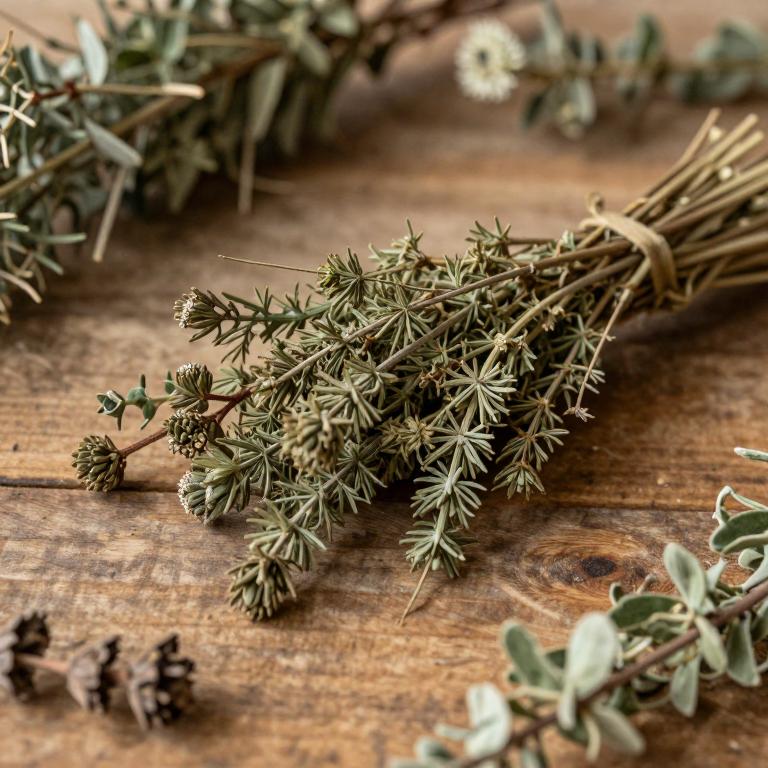
Names and Synonyms
Scientific Names
Accepted name
Acaena pinnatifidaSynonyms
- Acaena pinnatifida var. aculeata
- Acaena pinnatifida var. eucantha
- Acaena pinnatifida var. montana
- Acaena pinnatifida var. leptophylla
- Acaena pinnatifida var. californica
- Acaena euacantha
- Acaena leptophylla
- Acaena pinnatifida subsp. grandiflora
- Acaena pinnatifida subsp. heterotricha
- Acaena pinnatifida var. humilior
- Acaena pinnatifida subsp. hypoleuca
- Acaena pinnatifida var. intermedia
- Acaena pinnatifida subsp. liocarpa
- Acaena pinnatifida var. longifolia
- Acaena pinnatifida subsp. longifolia
- Acaena pinnatifida var. oligacantha
- Acaena pinnatifida subsp. oligacantha
- Acaena pinnatifida var. parvifrons
- Acaena pinnatifida subsp. pliacantha
- Acaena pinnatifida subsp. tomentellicupula
- Acaena pinnatifida var. uspallatensis
- Acaena pectinata
- Acaena pinnatifida var. aconcaguensis
- Acaena pinnatifida subsp. aculeata
- Acaena pinnatifida subsp. brevispica
- Acaena pinnatifida var. calcitrapa
- Acaena pinnatifida var. depauperata
- Acaena pinnatifida var. elatior
- Acaena calcitrapa
- Acaena californica
- Acaena californica var. brevifoliolata
- Acaena californica var. grandis
- Acaena californica var. polyarthrotricha
- Acaena longifolia
- Acaena multifida subsp. abavia
- Acaena multifida subsp. alaticonnata
- Acaena multifida var. minor
- Acaena multifida var. subexalaris
- Acaena oligacantha
- Ancistrum pinnatifidum
- Acaena californica var. remotiflorens
- Acaena californica var. subglabriscapa
- Acaena arthrotricha
- Acaena andicola
- Acaena aculeata
- Acaena incisa
- Acaena multifida subsp. canella
- Acaena multifida var. glaberrima
- Acaena multifida subsp. intercedens
- Acaena multifida var. microphylla
- Acaena multifida subsp. multiglomerulans
- Acaena multifida subsp. quinquefida
- Acaena multifida var. ramificans
- Acaena multifida var. utrinquepilosa
- Acaena pinnatifida var. glabrata
- Acaena pinnatifida var. glabricupula
- Acaena pinnatifida var. gracilescens
- Acaena pinnatifida var. longiuscula
- Acaena pinnatifida var. macrura
- Acaena pinnatifida subsp. mansoensis
- Acaena pinnatifida subsp. membranacea
- Acaena pinnatifida subsp. mollis
- Acaena pinnatifida subsp. nudiscapa
- Acaena pinnatifida var. pallidiflora
Regional and Traditional Names
German:
- schwarzes Stachelnüsschen
Sources: Wikidata, Catalogue of Life
Taxonomical Classification
This plant belongs to the kingdom Plantae and is classified under the phylum Streptophyta and class Equisetopsida. Within the subclass Magnoliidae, it is organized under the order Rosales and the family Rosaeaceae. Finally, it is identified by the genus Acaena, specifically as the species Acaena pinnatifida.
| Rank | Classification |
|---|---|
| Kingdom | Plantae |
| Phylum | Streptophyta |
| Class | Equisetopsida |
| Subclass | Magnoliidae |
| Order | Rosales |
| Family | Rosaceae |
| Genus | Acaena |
Sources: The World Checklist of Vascular Plants (WCVP)
Distribution
This plant exhibits a wide geographical distribution spanning across North and South America. In the Northern Hemisphere, it can be found within the state of California in the Southwestern U.S.A. Its presence extends significantly into Southern South America, where it is documented throughout various regions of Argentina. Specifically, it inhabits the Northeast, South, and Northwest portions of the Argentine territory. Additionally, the species is distributed across the central regions of Chile.
| Region | Area |
|---|---|
| Southwestern U.S.A. | California |
| Southern South America | Argentina Northeast |
| Southern South America | Argentina South |
| Southern South America | Argentina Northwest |
| Southern South America | Chile Central |
| Southern South America | Chile South |
Sources: The World Checklist of Vascular Plants (WCVP)
Botanical Identification
Ecology
The ecology of Acaeana pinnatifida is characterized by its adaptation to diverse montane environments, specifically occupying a significant altitudinal gradient within mountainous terrains. This species thrives across a broad elevational range, establishing itself in habitats that begin at a minimum altitude of 1300 m AMSL and extending upward to a maximum elevation of 4000 m AMSL. Such a wide vertical distribution suggests a high degree of ecological plasticity, allowing the plant to tolerate varying temperature regimes, fluctuating atmospheric pressures, and different levels of UV exposure associated with increasing altitude. This ability to persist from mid-elevation montane zones to high-altitude alpine or sub-alpine ecosystems dictates its role in diverse soil compositions and microclimates found within these specific topographical strata.
- Elevational range max:
- 4000 m AMSL
- Elevational range min:
- 1300 m AMSL
Life history
The life history of Acaena pinnatifida is characterized by a perennial lifecycle, allowing the species to persist across multiple growing seasons. In terms of its structural growth habit and survival strategy, the plant is classified as a hemicryptophyte, meaning its perennial buds are located at or just below the soil surface, protected by leaf litter or organic matter during unfavorable conditions. This hemicryptophytic life form ensures its long-term presence in its habitat, enabling it to regenerate and thrive through successive environmental cycles.
- Life form :
- hemicryptophyte
- Lifecycle :
- perennial
Morphology
The morphology of Acacia pinnatifida is characterized by a growth form primarily classified as a herb and a forb, exhibiting a non-woody structure throughout its development. This plant is non-woody in nature and functions as an independent organism, lacking any parasitic or epiphytic tendencies, as it maintains a terrestrial habit. In terms of its physical stance, it is a self-supporting plant, categorized as both a self-supporting climber and a self-supporting non-climber, rather than being an obligatory vine or liana. Its ecological niche is defined by a terrestrial lifestyle, distinguishing it from aquatic or semiaquatic species.
- Aquatic :
- terrestrial
- Climber :
- self-supporting
- Epiphyte :
- terrestrial
- Growth form :
- herb
- Growth form :
- forb
- Parasite :
- independent
- Woodiness :
- non-woody
Physiology
The physiology of Acaena pinnatifida is characterized by a C3 photosynthetic pathway, a fundamental metabolic process in which carbon dioxide is fixed directly through the Calvin cycle without the specialized concentration mechanisms found in C4 or CAM plants. This metabolic strategy dictates the plant's water-use efficiency and carbon assimilation rates, as it relies on the enzyme RuBisCO to facilitate the carboxylation of ribulose-1,5-bisphosphate. Consequently, its physiological performance is highly sensitive to ambient temperature and moisture availability, often requiring optimal hydration levels to maintain stomatal conductance and prevent photorespiration. The energy conversion process within its chloroplasts drives the synthesis of organic compounds, supporting the structural growth and secondary metabolic activities essential to its biological functions.
- Photosynthetic pathway :
- C3
Reproduction
The reproduction of Acaena pinnatifida is characterized by the production of specialized seeds that exhibit a highly uniform mass profile. Quantitative analysis of the seed characteristics reveals a consistent seed mass, with a mean value of 0.0089 g. This uniformity is absolute across the sampled population, as both the maximum and minimum recorded seed mass values are identical at 0.0089 g. This lack of variance in seed weight suggests a highly stabilized reproductive strategy, ensuring that each seed carries a precise and standardized amount of maternal resources to support early seedling development.
- Seed mass mean:
- 0.0089 g
Sources: Global Inventory of Floras and Traits (GIFT)
Chemicals
Acaena pinnatifida has 10 reported phytochemicals identified across 0 scientific publications and several other databases. The most consistently reported chemicals include (+)-catechin, 2-epi-Tormentic acid, Apigenin 7-O-glucoside, BETA-SITOSTEROL, Euscaphic acid.
| Chemical | Supporting sources | Consensus |
|---|---|---|
| (+)-catechin | 1 supporting sources | ★☆☆☆☆ |
| 2-epi-Tormentic acid | 1 supporting sources | ★☆☆☆☆ |
| Apigenin 7-O-glucoside | 1 supporting sources | ★☆☆☆☆ |
| BETA-SITOSTEROL | 1 supporting sources | ★☆☆☆☆ |
| Euscaphic acid | 1 supporting sources | ★☆☆☆☆ |
| Niga-ichigoside F1 | 1 supporting sources | ★☆☆☆☆ |
| Niga-ichigoside F2 | 1 supporting sources | ★☆☆☆☆ |
| Pomolic acid | 1 supporting sources | ★☆☆☆☆ |
| Pomolic acid 3-acetate | 1 supporting sources | ★☆☆☆☆ |
| Tormentic acid | 1 supporting sources | ★☆☆☆☆ |
(+)-catechin
- Zeitschrift fur Naturforschung. C, Journal of biosciences
2-epi-Tormentic acid
- Zeitschrift fur Naturforschung. C, Journal of biosciences
Apigenin 7-O-glucoside
- Zeitschrift fur Naturforschung. C, Journal of biosciences
BETA-SITOSTEROL
- Zeitschrift fur Naturforschung. C, Journal of biosciences
Euscaphic acid
- Zeitschrift fur Naturforschung. C, Journal of biosciences
Niga-ichigoside F1
- Zeitschrift fur Naturforschung. C, Journal of biosciences
Niga-ichigoside F2
- Zeitschrift fur Naturforschung. C, Journal of biosciences
Pomolic acid
- Zeitschrift fur Naturforschung. C, Journal of biosciences
Pomolic acid 3-acetate
- Zeitschrift fur Naturforschung. C, Journal of biosciences
Tormentic acid
- Zeitschrift fur Naturforschung. C, Journal of biosciences