wattles
Acacia · Accepted scientific name
Scientific literature: Very Sparse (43 studies) · ★☆☆☆☆
Wattles, scientifically known as Acacia, is a diverse genus of flowering plants celebrated for their vibrant blooms and therapeutic potential. Renowned for their resilience, various species offer medicinal properties, including anti-inflammatory and antimicrobial benefits. From traditional indigenous healing to modern pharmacology, Acacia remains a vital resource in botanical medicine.
- Family
- Fabaceae
- Native range
- Europe
- Parts used
- Leaf · Seed
- Common names
- Wattles · Wattle
- Scientific synonyms
- Hecatandra · Adianthum · 6 more
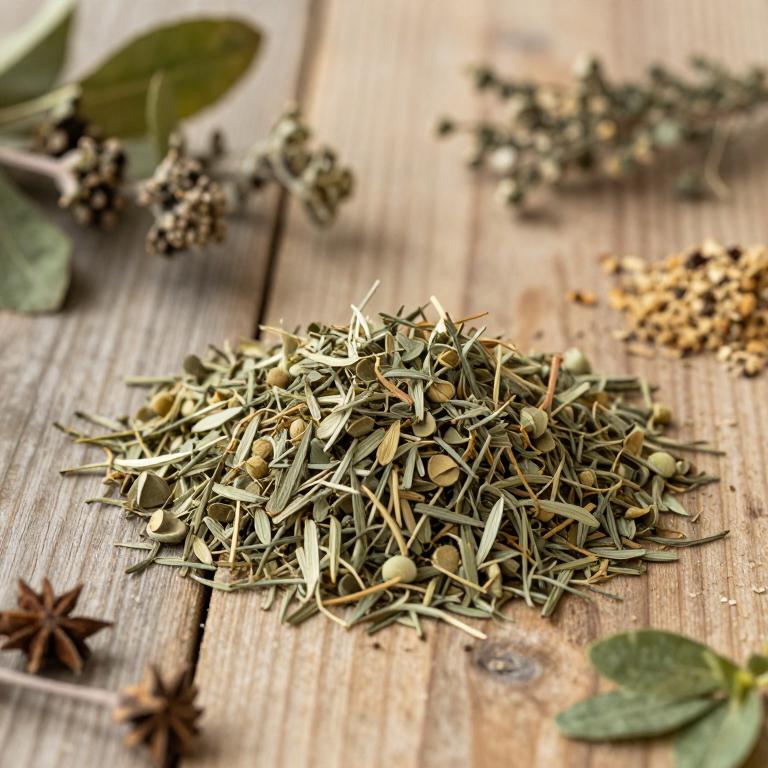
Names and Synonyms
Common Names
- wattles
- wattle
Scientific Names
Accepted name
AcaciaSynonyms
- Hecatandra
- Adianthum
- Chithonanthus
- Zigmaloba
- Tetracheilos
- Drepaphyla
- Racosperma
- Cuparilla
Regional and Traditional Names
Spanish:
- acacias
German:
- Akazien
- Akazienholz
- Akazie
- Akazien
French:
- mimosa d'hiver
- mimosa des fleuristes
Sources: Wikidata, Catalogue of Life
Taxonomical Classification
This plant belongs to the kingdom Plantae and is classified under the phylum Streptophyta and class Equisetopsida. Within the subclass Magnoliidae, it is further organized into the order Fabales and the family Fabaceae. Finally, it is identified by its specific genus, Acacia.
| Rank | Classification |
|---|---|
| Kingdom | Plantae |
| Phylum | Streptophyta |
| Class | Equisetopsida |
| Subclass | Magnoliidae |
| Order | Fabales |
| Family | Fabaceae |
| Genus | Acacia |
Sources: The World Checklist of Vascular Plants (WCVP)
Distribution
This plant exhibits a specific geographical distribution across several European regions. In Northern Europe, its presence can be found within Great Britain. Moving toward Southwestern Europe, it is located in the Baleares and Corse. The species also extends across the mainland in France. Finally, its range continues through the coastal areas of Portugal.
| Region | Area |
|---|---|
| Northern Europe | Great Britain |
| Southwestern Europe | Baleares |
| Southwestern Europe | Corse |
| Southwestern Europe | France |
| Southwestern Europe | Portugal |
| Southwestern Europe | Sardegna |
| Southwestern Europe | Spain |
| Southeastern Europe | Albania |
| Southeastern Europe | Greece |
| Southeastern Europe | Italy |
Sources: The World Checklist of Vascular Plants (WCVP)
Plant Parts
Acacia has 2 reported plant parts identified across 3 scientific publications and several other databases that are studied for medicinal purposes. The most consistently reported plant part include leaf, seed.
| Plant part | Supporting sources | Consensus |
|---|---|---|
| Leaf | 2 supporting sources | ★☆☆☆☆ |
| Seed | 1 supporting sources | ★☆☆☆☆ |
Leaf
- Analytical biochemistry
- Pakistan journal of pharmaceutical sciences
Seed
- Molecules (Basel, Switzerland)
Chemicals
Acacia has 10 reported phytochemicals identified across 3 scientific publications and several other databases. The most consistently reported chemicals include Flavonoids, Amines, Condensed Tannins, Fatty acids, Fluoroacetate.
| Chemical | Supporting sources | Consensus |
|---|---|---|
| Flavonoids | 2 supporting sources | ★☆☆☆☆ |
| Amines | 1 supporting sources | ★☆☆☆☆ |
| Condensed Tannins | 1 supporting sources | ★☆☆☆☆ |
| Fatty acids | 1 supporting sources | ★☆☆☆☆ |
| Fluoroacetate | 1 supporting sources | ★☆☆☆☆ |
| Hydrolyzable Tannins | 1 supporting sources | ★☆☆☆☆ |
| Kessane | 1 supporting sources | ★☆☆☆☆ |
| Tannins | 1 supporting sources | ★☆☆☆☆ |
| Terpenes | 1 supporting sources | ★☆☆☆☆ |
| chrysin | 1 supporting sources | ★☆☆☆☆ |
Flavonoids
- Molecules (Basel, Switzerland)
- Metabolites
Amines
- Molecules (Basel, Switzerland)
Condensed Tannins
- Molecules (Basel, Switzerland)
Fatty acids
- Molecules (Basel, Switzerland)
Fluoroacetate
- Molecules (Basel, Switzerland)
Hydrolyzable Tannins
- Molecules (Basel, Switzerland)
Kessane
- Molecules (Basel, Switzerland)
Tannins
- Metabolites
Terpenes
- Molecules (Basel, Switzerland)
chrysin
- Antioxidants (Basel, Switzerland)
Activities
Acacia has 8 reported activities identified across 3 scientific publications and several other databases. The most consistently reported activities include Antioxidant, Anticancer, Antidiabetic, Antimicrobial, Anthelmintic.
| Activity | Supporting sources | Consensus |
|---|---|---|
| Antioxidant | 3 supporting sources | ★★☆☆☆ |
| Anticancer | 2 supporting sources | ★☆☆☆☆ |
| Antidiabetic | 2 supporting sources | ★☆☆☆☆ |
| Antimicrobial | 2 supporting sources | ★☆☆☆☆ |
| Anthelmintic | 1 supporting sources | ★☆☆☆☆ |
| Antibacterial | 1 supporting sources | ★☆☆☆☆ |
| Antiproliferative | 1 supporting sources | ★☆☆☆☆ |
| Antiviral | 1 supporting sources | ★☆☆☆☆ |
Antioxidant
- Molecules (Basel, Switzerland)
- Antioxidants (Basel, Switzerland)
- Plants (Basel, Switzerland)
Anticancer
- Molecules (Basel, Switzerland)
- Antioxidants (Basel, Switzerland)
Antidiabetic
- Molecules (Basel, Switzerland)
- Antioxidants (Basel, Switzerland)
Antimicrobial
- Antioxidants (Basel, Switzerland)
- Plants (Basel, Switzerland)
Anthelmintic
- Plants (Basel, Switzerland)
Antibacterial
- BioMed research international
Antiproliferative
- Antioxidants (Basel, Switzerland)
Antiviral
- Molecules (Basel, Switzerland)
Conditions
Acacia has 11 reported investigations on conditions identified across 3 scientific publications and several other databases. The most consistently reported conditions include adiposity, burns, cancer, diarrhea, inflammation.
| Condition | Supporting sources | Consensus |
|---|---|---|
| Adiposity | 1 supporting sources | ★☆☆☆☆ |
| Burns | 1 supporting sources | ★☆☆☆☆ |
| Cancer | 1 supporting sources | ★☆☆☆☆ |
| Diarrhea | 1 supporting sources | ★☆☆☆☆ |
| Inflammation | 1 supporting sources | ★☆☆☆☆ |
| Melanoma | 1 supporting sources | ★☆☆☆☆ |
| Mood disorders | 1 supporting sources | ★☆☆☆☆ |
| Oxidative stress | 1 supporting sources | ★☆☆☆☆ |
| Substance dependence | 1 supporting sources | ★☆☆☆☆ |
| Viral infections | 1 supporting sources | ★☆☆☆☆ |
Adiposity
- Antioxidants (Basel, Switzerland)
Burns
- BioMed research international
Cancer
- Molecules (Basel, Switzerland)
Diarrhea
- Molecules (Basel, Switzerland)
Inflammation
- Molecules (Basel, Switzerland)
Melanoma
- Antioxidants (Basel, Switzerland)
Mood disorders
- Frontiers in psychiatry
Oxidative stress
- Molecules (Basel, Switzerland)
Substance dependence
- Frontiers in psychiatry
Viral infections
- Molecules (Basel, Switzerland)
Preparations
Acacia has 7 reported preparations identified across 3 scientific publications and several other databases. The most consistently reported preparations include honey, AAq, Acacia honey, aqueous extracts, decoctions.
| Preparation | Supporting sources | Consensus |
|---|---|---|
| Honey | 2 supporting sources | ★☆☆☆☆ |
| Aaq | 1 supporting sources | ★☆☆☆☆ |
| Acacia honey | 1 supporting sources | ★☆☆☆☆ |
| Aqueous extracts | 1 supporting sources | ★☆☆☆☆ |
| Decoctions | 1 supporting sources | ★☆☆☆☆ |
| Extracts of acacia and eucalyptus leaves | 1 supporting sources | ★☆☆☆☆ |
| Infusions | 1 supporting sources | ★☆☆☆☆ |
Honey
- Antioxidants (Basel, Switzerland)
- Archives of medical sciences. Atherosclerotic diseases
Aaq
- Pakistan journal of pharmaceutical sciences
Acacia honey
- Molecules (Basel, Switzerland)
Aqueous extracts
- Journal of pharmacy & bioallied sciences
Decoctions
- Fitoterapia
Extracts of acacia and eucalyptus leaves
- Analytical biochemistry
Infusions
- Fitoterapia