Hickory Wattle
Acacia mangium · Accepted scientific name
Scientific literature: Very Sparse (7 studies) · ★☆☆☆☆
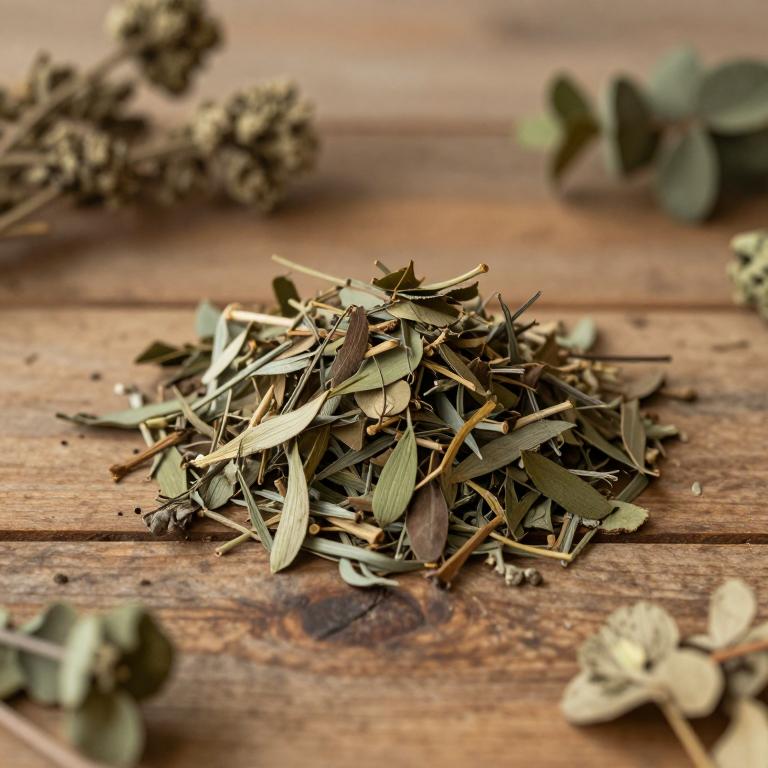
Hickory Wattle, scientifically known as Acacia mangium, is a versatile, fast-growing legume native to Australia. Renowned for its ability to thrive in poor soils, it plays a vital role in reforestation and nitrogen fixation. Beyond ecological benefits, it provides valuable timber and medicinal properties used in traditional healing practices.
- Family
- Fabaceae
- Native range
- Africa
- Parts used
- Leaf
- Common names
- Black-Wattle · Brown-Salwood · 9 more
- Scientific synonyms
- Racosperma Mangium
Names and Synonyms
Common Names
- black-wattle
- brown-salwood
- Black Wattle
- Brown Salwood
- Hickory Wattle
- Sabah salwood
- broadleaf salwood
- northern wattle
- sally wattle
- Mangium
- Big-leaved Acacia
Scientific Names
Accepted name
Acacia mangiumSynonyms
- Racosperma mangium
Regional and Traditional Names
Spanish:
- Acacia de hojas grandes
Sources: Wikidata, Catalogue of Life
Taxonomical Classification
This plant belongs to the kingdom Plantae and is classified under the phylum Streptophyta and class Equisetopsida. Within the subclass Magnoliidae, it falls under the order Fabales and the family Fabaceae. Finally, its taxonomic identity is defined by the genus Acacia.
| Rank | Classification |
|---|---|
| Kingdom | Plantae |
| Phylum | Streptophyta |
| Class | Equisetopsida |
| Subclass | Magnoliidae |
| Order | Fabales |
| Family | Fabaceae |
| Genus | Acacia |
Sources: The World Checklist of Vascular Plants (WCVP)
Distribution
This plant exhibits a diverse geographical range spanning across several continents and regions. In West Tropical Africa, its presence is specifically noted in Guinea. It can also be found within West-Central Tropical Africa, specifically in Cameroon and the DR Congo. Moving toward the Western Indian Ocean, the species is distributed within the Comoros. Finally, its range extends to the Indian Subcontinent, where it is located in Bangladesh.
| Region | Area |
|---|---|
| West Tropical Africa | Guinea |
| West-Central Tropical Africa | Cameroon |
| West-Central Tropical Africa | DR Congo |
| Western Indian Ocean | Comoros |
| Indian Subcontinent | Bangladesh |
| Indian Subcontinent | India |
| Indian Subcontinent | Sri Lanka |
| Indo-China | Myanmar |
| Indo-China | Vietnam |
| Malesia | Borneo |
Sources: The World Checklist of Vascular Plants (WCVP)
Botanical Identification
Ecology
The ecology of Acacia mangium is characterized by its remarkable adaptability to a wide range of environmental conditions, allowing it to colonize diverse landscapes. It thrives across a significant altitudinal gradient, with an elevational range spanning from 0 m AMSL to a maximum of 1450 m AMSL. This broad vertical distribution enables the species to inhabit various ecological zones, from lowland tropical regions to higher-altitude montane environments. The plant is highly resilient to varying soil types and can tolerate both nutrient-poor and disturbed sites, often acting as a pioneer species that facilitates ecological succession. Its ability to fix nitrogen through symbiotic relationships with rhizobia further enhances its capacity to establish itself in degraded ecosystems, influencing soil chemistry and promoting biodiversity in the surrounding habitat.
- Elevational range max:
- 1450 m AMSL
- Elevational range min:
- 0 m AMSL
Life history
The life history of Acacia mangium is characterized by a perennial lifecycle, allowing the plant to persist through multiple growing seasons and establish a long-term presence in its ecosystem. As a phanerophyte, it maintains its photosynthetic organs on elevated woody stems, a growth habit that facilitates its structural dominance in forest environments. This phanerophyte life form ensures that the plant's vital structures are well-positioned above the ground level, contributing to its overall stability and resource acquisition capabilities. Furthermore, the species exhibits an evergreen deciduousness, meaning it retains its foliage throughout the year rather than shedding it seasonally, which supports continuous photosynthetic activity and consistent growth patterns.
- Deciduousness :
- evergreen
- Life form :
- phanerophyte
- Lifecycle :
- perennial
Morphology
The morphology of Acacia mangium is characterized by its growth form as a large, woody tree that is entirely self-supporting. This species is a terrestrial plant, functioning as an independent organism rather than an epiphyte or a parasite. It typically attains a significant stature, with an average plant height of 25 m and the potential to reach a maximum height of up to 27 m. As a self-supporting tree, it does not exhibit climbing habits such as lianas or vines, nor does it possess aquatic or semiaquatic adaptations.
- Aquatic :
- terrestrial
- Climber :
- self-supporting
- Epiphyte :
- terrestrial
- Growth form :
- tree
- Parasite :
- independent
- Plant height max:
- 27 m
- Plant height mean:
- 25 m
- Woodiness :
- woody
Physiology
The physiology of Acacia mangium is characterized by a C3 photosynthetic pathway, which governs its carbon assimilation processes and metabolic efficiency under varying environmental conditions. A defining physiological feature of this species is its capacity for biological nitrogen fixation; it functions as a nitrogen fixer by establishing symbiotic relationships with soil bacteria, typically from the genus Bradyrhizobium, within specialized root nodules. This symbiotic nitrogen fixation allows the plant to convert atmospheric nitrogen into ammonia, providing a critical nutrient source that supports rapid biomass production and growth, particularly in nitrogen-deficient tropical soils.
- Nitrogen fixer :
- yes
- Photosynthetic pathway :
- C3
Reproduction
The reproduction of Acacia mangium is characterized by a biotic pollination syndrome, primarily driven by insects. This pollination process is supported by the presence of self-fertilization, which ensures reproductive success within its ecosystem. The resulting seeds are relatively small, with a mean seed mass of 0.0146 g. Individual seed weights vary within a specific range, with a minimum mass of 0.0102 g and a maximum mass reaching up to 0.019 g.
- Pollination syndrome :
- insect
- Pollination syndrome :
- biotic
- Seed mass max:
- 0.019 g
- Seed mass mean:
- 0.0146 g
- Seed mass min:
- 0.0102 g
- Self fertilization :
- present
Sources: Global Inventory of Floras and Traits (GIFT)
Plant Parts
Acacia mangium has 1 reported plant parts identified across 1 scientific publications and several other databases that are studied for medicinal purposes. The most consistently reported plant part include leaf.
| Plant part | Supporting sources | Consensus |
|---|---|---|
| Leaf | 1 supporting sources | ★☆☆☆☆ |
Leaf
- F1000Research
Chemicals
Acacia mangium has 5 reported phytochemicals identified across 1 scientific publications and several other databases. The most consistently reported chemicals include DICHLOROMETHANE, EPIISOPILOTURINE, ethanol, methanol, n-Hexane.
| Chemical | Supporting sources | Consensus |
|---|---|---|
| DICHLOROMETHANE | 1 supporting sources | ★☆☆☆☆ |
| EPIISOPILOTURINE | 1 supporting sources | ★☆☆☆☆ |
| ethanol | 1 supporting sources | ★☆☆☆☆ |
| methanol | 1 supporting sources | ★☆☆☆☆ |
| n-Hexane | 1 supporting sources | ★☆☆☆☆ |
DICHLOROMETHANE
- F1000Research
EPIISOPILOTURINE
- International journal of biological macromolecules
ethanol
- F1000Research
methanol
- F1000Research
n-Hexane
- F1000Research
Conditions
Acacia mangium has 1 reported investigations on conditions identified across 1 scientific publications and several other databases. The most consistently reported conditions include hepatitis C virus.
| Condition | Supporting sources | Consensus |
|---|---|---|
| Hepatitis c virus | 1 supporting sources | ★☆☆☆☆ |
Hepatitis c virus
- F1000Research
Preparations
Acacia mangium has 4 reported preparations identified across 1 scientific publications and several other databases. The most consistently reported preparations include dichloromethane extracts, ethanol extracts, methanol extracts, n-hexane extracts.
| Preparation | Supporting sources | Consensus |
|---|---|---|
| Dichloromethane extracts | 1 supporting sources | ★☆☆☆☆ |
| Ethanol extracts | 1 supporting sources | ★☆☆☆☆ |
| Methanol extracts | 1 supporting sources | ★☆☆☆☆ |
| N-hexane extracts | 1 supporting sources | ★☆☆☆☆ |
Dichloromethane extracts
- F1000Research
Ethanol extracts
- F1000Research
Methanol extracts
- F1000Research
N-hexane extracts
- F1000Research