Acacia kempeana
Acacia kempeana · Accepted scientific name
Scientific literature: Very Sparse (6 studies) · ★☆☆☆☆
Acacia kempeana, scientifically known as Acacia kempeana, is a resilient shrub native to the arid landscapes of Australia. Renowned for its unique ability to thrive in nutrient-poor soils, this medicinal plant offers significant ethnobotanical value, providing traditional remedies used by indigenous communities to treat various ailments and skin conditions.
- Family
- Fabaceae
- Native range
- Australasia
- Parts used
- Leaf
- Common names
- Not available
- Scientific synonyms
- Racosperma Kempeanum
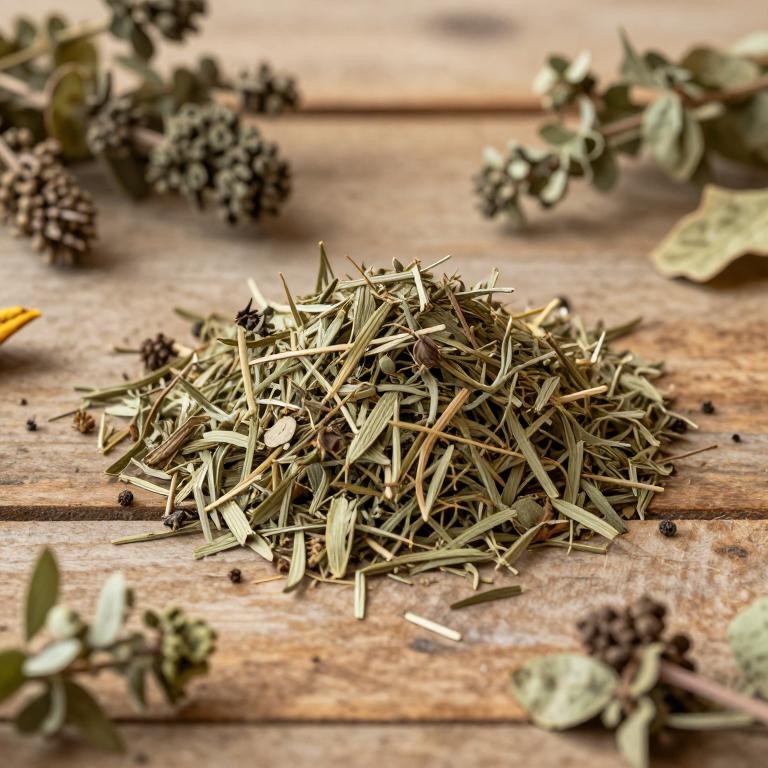
Names and Synonyms
Scientific Names
Accepted name
Acacia kempeanaSynonyms
- Racosperma kempeanum
Sources: Wikidata
Taxonomical Classification
This plant belongs to the kingdom Plantae within the phylum Streptophyta and the class Equisetopsida. As a member of the subclass Magnoliidae, it is further classified under the order Fabales and the family Fabaceae. Ultimately, its taxonomic identity is defined by its placement within the genus Acacia.
| Rank | Classification |
|---|---|
| Kingdom | Plantae |
| Phylum | Streptophyta |
| Class | Equisetopsida |
| Subclass | Magnoliidae |
| Order | Fabales |
| Family | Fabaceae |
| Genus | Acacia |
Sources: The World Checklist of Vascular Plants (WCVP)
Distribution
This plant is native to the diverse landscapes found across the Australian continent. Its range extends significantly through the tropical and arid regions of the Northern Territory. In the eastern part of the country, it can be found growing within Queensland. The species also inhabits portions of South Australia, demonstrating its ability to adapt to various climates. Finally, its distribution reaches across to the vast terrains of Western Australia.
| Region | Area |
|---|---|
| Australia | Northern Territory |
| Australia | Queensland |
| Australia | South Australia |
| Australia | Western Australia |
Sources: The World Checklist of Vascular Plants (WCVP)
Botanical Identification
Morphology
The morphology of Acacia kempeana is characterized by a versatile growth form that can manifest as either a shrub or a tree, exhibiting a woody structure throughout its development. As an independent organism, it does not function as a parasite and is primarily terrestrial in its habitat, though it may occupy semiaquatic environments. The plant is self-supporting rather than a climber, with a stature that typically ranges from a minimum height of 1 meter to a maximum height of 6 meters.
- Aquatic :
- terrestrial
- Climber :
- self-supporting
- Growth form :
- tree
- Growth form :
- shrub
- Parasite :
- independent
- Plant height max:
- 6 m
- Plant height min:
- 1 m
- Woodiness :
- woody
Physiology
The physiology of Acacia kempeana is fundamentally characterized by its carbon fixation strategy, utilizing a C3 photosynthetic pathway to drive its metabolic processes. As a C3 plant, it undergoes the standard Calvin cycle where carbon dioxide is fixed directly by the enzyme RuBisCO to form a three-carbon compound, a process that is highly efficient under moderate temperatures and sufficient water availability. This photosynthetic mechanism dictates the plant's gas exchange dynamics and water-use efficiency, influencing how it manages transpiration and nutrient uptake in its native environments. The energy captured through this C3 pathway supports the plant's structural growth, reproductive development, and overall physiological resilience within its ecological niche.
- Photosynthetic pathway :
- C3
Reproduction
The reproduction of Acacia kempeana is characterized by specific seed morphologies and diverse dispersal strategies. The seeds produced by this species are relatively small and consistent in size, with a measured minimum mass of 0.01445 g, a maximum mass of 0.015102 g, and an average seed mass of approximately 0.014776 g. In terms of how these seeds are distributed throughout its habitat, the species exhibits a complex dispersal syndrome; while it is primarily categorized as zoochorous, meaning it relies on animals for seed dispersal, its reproductive success is supported by a multifaceted approach that includes anemochorous (wind), autochorous (self-dispersal), hydrochorous (water), and unspecialized dispersal mechanisms.
- Dispersal syndrome :
- zoochorous
- Seed mass max:
- 0.015102 g
- Seed mass mean:
- 0.014776 g
- Seed mass min:
- 0.01445 g
Sources: Global Inventory of Floras and Traits (GIFT)
Plant Parts
Acacia kempeana has 1 reported plant parts identified across 1 scientific publications and several other databases that are studied for medicinal purposes. The most consistently reported plant part include leaf.
| Plant part | Supporting sources | Consensus |
|---|---|---|
| Leaf | 1 supporting sources | ★☆☆☆☆ |
Leaf
- Journal of basic microbiology
Chemicals
Acacia kempeana has 2 reported phytochemicals identified across 1 scientific publications and several other databases. The most consistently reported chemicals include ABTS, DPPH.
| Chemical | Supporting sources | Consensus |
|---|---|---|
| ABTS | 1 supporting sources | ★☆☆☆☆ |
| DPPH | 1 supporting sources | ★☆☆☆☆ |
ABTS
- BMC complementary and alternative medicine
DPPH
- BMC complementary and alternative medicine
Conditions
Acacia kempeana has 3 reported investigations on conditions identified across 1 scientific publications and several other databases. The most consistently reported conditions include hyperglycemia, oxidative stress, type 2 diabetes.
| Condition | Supporting sources | Consensus |
|---|---|---|
| Hyperglycemia | 1 supporting sources | ★☆☆☆☆ |
| Oxidative stress | 1 supporting sources | ★☆☆☆☆ |
| Type 2 diabetes | 1 supporting sources | ★☆☆☆☆ |
Hyperglycemia
- BMC complementary and alternative medicine
Oxidative stress
- BMC complementary and alternative medicine
Type 2 diabetes
- BMC complementary and alternative medicine
Preparations
Acacia kempeana has 1 reported preparations identified across 1 scientific publications and several other databases. The most consistently reported preparations include extracts.
| Preparation | Supporting sources | Consensus |
|---|---|---|
| Extracts | 1 supporting sources | ★☆☆☆☆ |
Extracts
- BMC complementary and alternative medicine