Acacia ancistrocarpa
Acacia ancistrocarpa · Accepted scientific name
Scientific literature: Very Sparse (8 studies) · ★☆☆☆☆
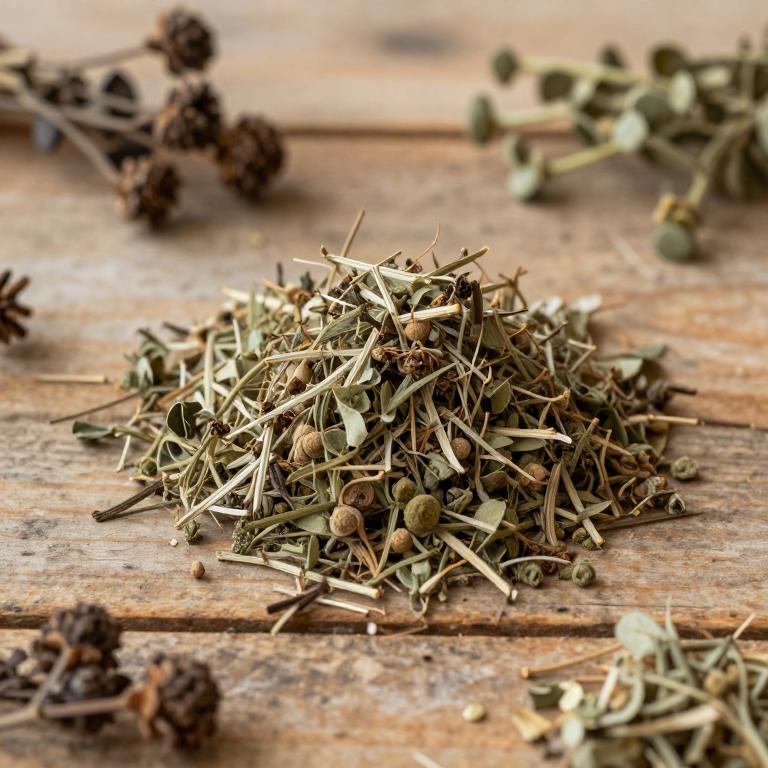
Acacia anciestrocarpa, scientifically known as Acacia anciestrocarpa, is a resilient medicinal plant valued for its diverse therapeutic properties. Primarily found in specific regional ecosystems, this species is utilized in traditional medicine to treat various ailments, offering significant pharmacological potential for developing modern treatments through its unique bioactive compounds.
- Family
- Not available
- Native range
- Australasia
- Parts used
- Leaf
- Common names
- Not available
- Scientific synonyms
- Not available
Names and Synonyms
Scientific Names
Accepted name
Acacia ancistrocarpaSources: Wikidata
Distribution
This plant, known as Acacia anciestrocarpa, exhibits a specific distribution across the Australian continent. Its presence is documented within the diverse landscapes of the Northern Territory. Additionally, the species can be found growing in various regions of Queensland. The geographical range also extends westward into the vast expanses of Western Australia. Together, these locations define the natural habitat where this medicinal plant thrives.
| Region | Area |
|---|---|
| Australia | Northern Territory |
| Australia | Queensland |
| Australia | Western Australia |
Sources: The World Checklist of Vascular Plants (WCVP)
Botanical Identification
Life history
The life history of Acacia ancistrocarpa is characterized by its status as a perennial organism, meaning it maintains its vegetative structures and remains active over multiple growing seasons rather than completing its cycle in a single year. As a perennial species, its development involves an establishment phase followed by sustained growth cycles that allow it to persist in its environment for extended periods. This longevity is supported by its ability to undergo repeated seasonal transitions, contributing to its long-term presence within its ecological niche.
- Lifecycle :
- perennial
Morphology
The morphology of Acacia ancistrocarpa is characterized by its growth form as a woody tree, ranging in height from a minimum of 1 meter to a maximum of 3 meters. As a self-supporting species, it does not function as a climber, liana, or vine, nor does it exhibit epiphytic behavior, remaining strictly terrestrial in its habitat. The plant operates as an independent organism, showing no parasitic tendencies, and maintains a robust, woody structure throughout its development.
- Aquatic :
- terrestrial
- Climber :
- self-supporting
- Epiphyte :
- terrestrial
- Growth form :
- tree
- Parasite :
- independent
- Plant height max:
- 3 m
- Plant height min:
- 1 m
- Woodiness :
- woody
Physiology
The physiology of Acacia ancistrocarpa is primarily characterized by its utilization of the C3 photosynthetic pathway, a metabolic strategy where carbon fixation occurs through the direct carboxylation of ribulose-1,5-bisphosphate by the enzyme RuBisCO. This C3 pathway dictates the plant's gas exchange dynamics and water-use efficiency, necessitating a complex balance between stomatal conductance for CO2 uptake and the prevention of excessive transpiration. To support this metabolic process, the plant employs physiological adaptations suited for its specific environmental niche, involving intricate regulation of osmotic potential and nutrient translocation within its vascular tissues. The reliance on C3 photosynthesis implies that the plant's carbon assimilation rates are highly sensitive to light intensity, temperature fluctuations, and the concentration of intercellular CO2, driving its internal resource allocation and overall growth patterns.
- Photosynthetic pathway :
- C3
Reproduction
The reproduction of Acacia ancistrocarpa is characterized by the production of seeds that exhibit specific morphological variations in weight. The seed mass within this species shows a measurable range, with a recorded minimum mass of 0.02423 g and a maximum mass of 0.048 g. On average, the seeds possess a mass of 0.03667 g, reflecting a consistent reproductive investment in seed size for successful germination and establishment.
- Seed mass max:
- 0.048 g
- Seed mass mean:
- 0.03667 g
- Seed mass min:
- 0.02423 g
Sources: Global Inventory of Floras and Traits (GIFT)
Plant Parts
Acacia ancistrocarpa has 1 reported plant parts identified across 1 scientific publications and several other databases that are studied for medicinal purposes. The most consistently reported plant part include leaf.
| Plant part | Supporting sources | Consensus |
|---|---|---|
| Leaf | 1 supporting sources | ★☆☆☆☆ |
Leaf
- Journal of ethnopharmacology
Conditions
Acacia ancistrocarpa has 7 reported investigations on conditions identified across 1 scientific publications and several other databases. The most consistently reported conditions include arthritis, asthma, edema, fever, infections.
| Condition | Supporting sources | Consensus |
|---|---|---|
| Arthritis | 1 supporting sources | ★☆☆☆☆ |
| Asthma | 1 supporting sources | ★☆☆☆☆ |
| Edema | 1 supporting sources | ★☆☆☆☆ |
| Fever | 1 supporting sources | ★☆☆☆☆ |
| Infections | 1 supporting sources | ★☆☆☆☆ |
| Rheumatism | 1 supporting sources | ★☆☆☆☆ |
| Snakebite | 1 supporting sources | ★☆☆☆☆ |
Arthritis
- Journal of ethnopharmacology
Asthma
- Journal of ethnopharmacology
Edema
- Journal of ethnopharmacology
Fever
- Journal of ethnopharmacology
Infections
- Journal of ethnopharmacology
Rheumatism
- Journal of ethnopharmacology
Snakebite
- Journal of ethnopharmacology