Hairy Indian Mallow
Abutilon grandiflorum · Accepted scientific name
Scientific literature: Very Sparse (5 studies) · ★☆☆☆☆
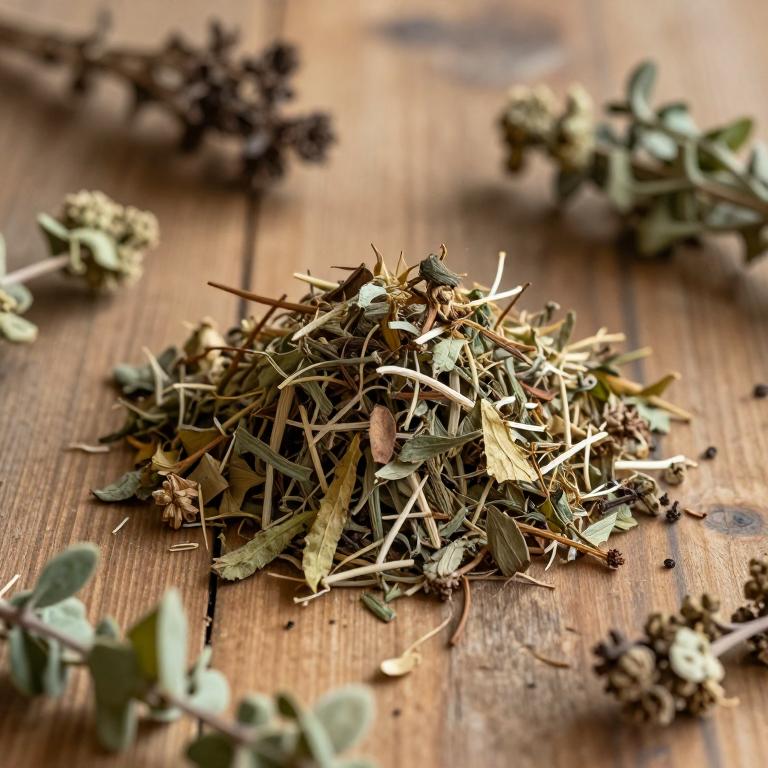
Hairy Indian Mallow, scientifically known as Abutilon grandiflorum, is a versatile medicinal shrub native to tropical regions. Renowned for its soft, pubescent foliage, this plant is traditionally utilized in various herbal remedies. It possesses significant therapeutic potential, particularly in treating inflammatory conditions and supporting overall wellness through its bioactive compounds.
- Family
- Malvaceae
- Native range
- Europe
- Parts used
- Leaf
- Common names
- Hairy Indian Mallow
- Scientific synonyms
- Not available
Names and Synonyms
Common Names
- Hairy Indian Mallow
Scientific Names
Accepted name
Abutilon grandiflorumRegional and Traditional Names
Spanish:
- Abutilo
German:
- Großblättrige Schönmalve
French:
- Abutilon à grandes feuilles
Sources: Wikidata, Catalogue of Life
Taxonomical Classification
This plant, Abutilon grandiflorum, belongs to the kingdom Plantae and the phylum Streptophyta. Within the class Equisetopsida and subclass Magnoliidae, it is classified under the order Malvales. Finally, it is a member of the family Malvaceae within the genus Abutilon.
| Rank | Classification |
|---|---|
| Kingdom | Plantae |
| Phylum | Streptophyta |
| Class | Equisetopsida |
| Subclass | Magnoliidae |
| Order | Malvales |
| Family | Malvaceae |
| Genus | Abutilon |
Sources: The World Checklist of Vascular Plants (WCVP)
Distribution
This plant exhibits a broad and diverse geographical distribution spanning several continents. In Southwestern Europe, its presence is specifically noted within the borders of Spain. Moving toward West-Central Tropical Africa, it can be found in the Gulf of Guinea Islands as well as the DR Congo. Its range further extends into East Tropical Africa, where it inhabits the landscapes of Kenya. Finally, the species is also documented occurring within Tanzania.
| Region | Area |
|---|---|
| Southwestern Europe | Spain |
| West-Central Tropical Africa | Gulf of Guinea Is. |
| West-Central Tropical Africa | DR Congo |
| East Tropical Africa | Kenya |
| East Tropical Africa | Tanzania |
| East Tropical Africa | Uganda |
| South Tropical Africa | Angola |
| South Tropical Africa | Malawi |
| South Tropical Africa | Mozambique |
| South Tropical Africa | Zimbabwe |
Sources: The World Checklist of Vascular Plants (WCVP)
Botanical Identification
Ecology
The ecology of Abutilon grandiflorum is characterized by its ability to inhabit a diverse range of altitudinal gradients, demonstrating significant adaptability to varying environmental conditions. This species can be found across a broad vertical distribution, spanning from low-lying areas at an elevation of 5 m AMSL to higher montane reaches reaching up to 1065 m AMSL. This wide elevational range suggests that the plant is capable of thriving in both lowland tropical or subtropical habitats and mid-altitude ecosystems, likely engaging with different microclimates, moisture levels, and soil compositions found across these shifting topographical zones.
- Elevational range max:
- 1065 m AMSL
- Elevational range min:
- 5 m AMSL
Life history
The life history of Abutilon grandiflorum is characterized by its classification as an annual, meaning it completes its entire biological cycle—from germination and vegetative growth to flowering and seed production—within a single growing season. Following the germination of seeds in favorable soil conditions, the plant undergoes a rapid period of vegetative development to establish its structural framework. This is followed by a reproductive phase where it produces large, distinctive flowers to facilitate pollination. Once fertilization occurs, the plant focuses its energy on seed maturation, after which the individual plant dies, leaving behind a seed bank that ensures the continuation of the species in the subsequent growing season.
- Lifecycle :
- annual
Morphology
The morphology of Abutilon grandiflorum is characterized by a shrubby growth form that is non-woody in structure. This plant is a terrestrial species, functioning as an independent organism rather than a parasite or an epiphyte. It typically exhibits an erect shoot orientation and is classified as a self-supporting plant. In terms of stature, it reaches a minimum plant height of 0.34 m and can grow to a maximum height of 2 m.
- Aquatic :
- terrestrial
- Climber :
- self-supporting
- Epiphyte :
- terrestrial
- Growth form :
- shrub
- Parasite :
- independent
- Plant height max:
- 2 m
- Plant height min:
- 0.34 m
- Shoot orientation :
- erect
- Woodiness :
- non-woody
Physiology
The physiology of Abutilon grandiflorum is characterized by a C3 photosynthetic pathway, which dictates its carbon fixation processes and metabolic efficiency within its specific environmental niche. The morphological expression of its photosynthetic surfaces is reflected in its leaf dimensions, where the foliage typically ranges from a minimum length of 6 cm to a maximum length of 15 cm. Complementing this longitudinal growth, the leaf width fluctuates between a minimum of 4 cm and a maximum of 12 cm, providing a structural framework that optimizes light interception and gas exchange necessary for its metabolic functions.
- Leaf length max:
- 15 cm
- Leaf length min:
- 6 cm
- Leaf width max:
- 12 cm
- Leaf width min:
- 4 cm
- Photosynthetic pathway :
- C3
Reproduction
The reproduction of Abutilon grandiflorum is characterized by a specific flowering cycle and distinct floral morphology. The plant exhibits a flowering period that typically commences in March and concludes in July, though the timing can be variable throughout the year. During this period, the plant produces vibrant orange flowers that range in length from a minimum of 1.5 cm to a maximum of 2 cm. Following successful pollination, the plant produces seeds that are remarkably uniform in weight; the seed mass remains constant at a mean, minimum, and maximum value of 0.00467 g.
- Flower colour :
- orange
- Flower length max:
- 2 cm
- Flower length min:
- 1.5 cm
- Flowering time :
- Mar
- Flowering time :
- Jul
- Seed mass mean:
- 0.00467 g
Sources: Global Inventory of Floras and Traits (GIFT)
Plant Parts
Abutilon grandiflorum has 1 reported plant parts identified across 1 scientific publications and several other databases that are studied for medicinal purposes. The most consistently reported plant part include leaf.
| Plant part | Supporting sources | Consensus |
|---|---|---|
| Leaf | 1 supporting sources | ★☆☆☆☆ |
Leaf
- Acta poloniae pharmaceutica
Chemicals
Abutilon grandiflorum has 3 reported phytochemicals identified across 1 scientific publications and several other databases. The most consistently reported chemicals include kaempferol, p-Hydroxybenzoic, quercetin 3-O-beta-glucopyranoside.
| Chemical | Supporting sources | Consensus |
|---|---|---|
| kaempferol | 1 supporting sources | ★☆☆☆☆ |
| p-Hydroxybenzoic | 1 supporting sources | ★☆☆☆☆ |
| quercetin 3-O-beta-glucopyranoside | 1 supporting sources | ★☆☆☆☆ |
kaempferol
- Acta poloniae pharmaceutica
p-Hydroxybenzoic
- Acta poloniae pharmaceutica
quercetin 3-O-beta-glucopyranoside
- Acta poloniae pharmaceutica
Activities
Abutilon grandiflorum has 1 reported activities identified across 1 scientific publications and several other databases. The most consistently reported activities include Cytotoxic.
| Activity | Supporting sources | Consensus |
|---|---|---|
| Cytotoxic | 1 supporting sources | ★☆☆☆☆ |
Cytotoxic
- Phytotherapy research : PTR
Preparations
Abutilon grandiflorum has 1 reported preparations identified across 1 scientific publications and several other databases. The most consistently reported preparations include leaves.
| Preparation | Supporting sources | Consensus |
|---|---|---|
| Leaves | 1 supporting sources | ★☆☆☆☆ |
Leaves
- Acta poloniae pharmaceutica