Pindrow Fir
Abies pindrow · Accepted scientific name
Scientific literature: Very Sparse (17 studies) · ★☆☆☆☆
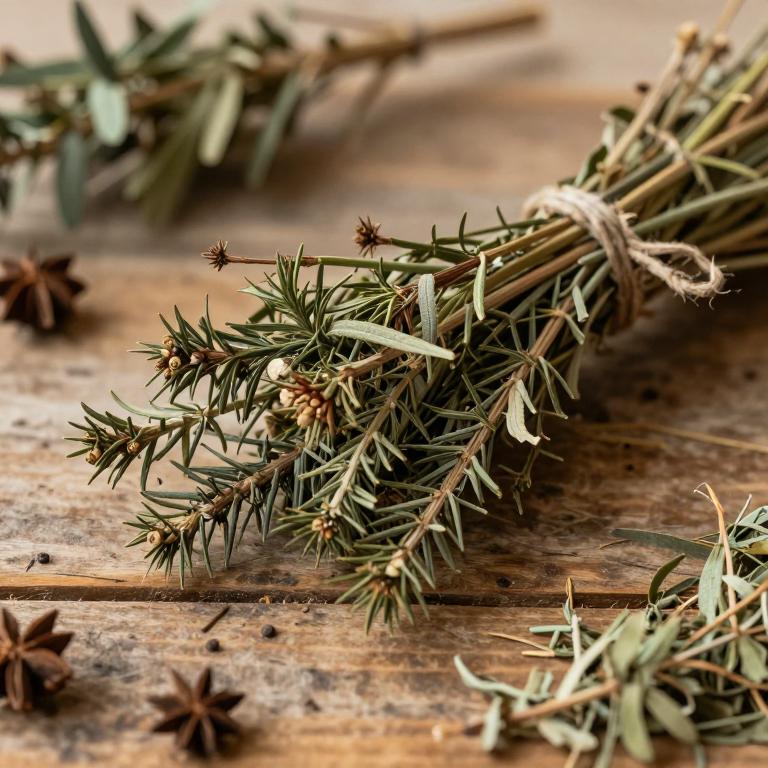
Pindrow Fir, scientifically known as Abies pindrow, is a majestic coniferous tree native to the Himalayan mountains. Renowned for its aromatic resin and high-quality timber, it holds significant medicinal value. Its essential oils are traditionally used to treat respiratory ailments, soothe inflammation, and promote overall wellness through aromatherapy.
- Family
- Pinaceae
- Native range
- Asia-Temperate
- Parts used
- Leaf
- Common names
- Pindrow Fir · West Himalayan Fir
- Scientific synonyms
- Pinus Spectabilis Var. Pindrow · Abies Webbiana Var. Pindrow · 2 more
Names and Synonyms
Common Names
- Pindrow Fir
- West Himalayan Fir
Scientific Names
Accepted name
Abies pindrowSynonyms
- Pinus spectabilis var. pindrow
- Abies webbiana var. pindrow
- Picea pindrow
- Pinus pindrow
Regional and Traditional Names
Spanish:
- Abeto pindrow
German:
- Pindrow-Tanne
- Abies webbiana var. pindrow
- Pinus pindrow
- Abies gamblei
Sources: Wikidata, Catalogue of Life
Taxonomical Classification
This plant, known scientifically as Abies pindrow, belongs to the kingdom Plantae and the phylum Streptophyta. Within the class Equisetopsida and subclass Pinidae, it is categorized under the order Pinales and the family Pinaceae. It is ultimately classified under the genus Abies.
| Rank | Classification |
|---|---|
| Kingdom | Plantae |
| Phylum | Streptophyta |
| Class | Equisetopsida |
| Subclass | Pinidae |
| Order | Pinales |
| Family | Pinaceae |
| Genus | Abies |
Sources: The World Checklist of Vascular Plants (WCVP)
Distribution
This plant, known as Abies pindrow, exhibits a specific distribution across several mountainous regions. In Western Asia, its presence can be noted within the borders of Afghanistan. Moving into the Indian Subcontinent, the species is widely distributed throughout Nepal. It is also commonly found across the varied terrains of Pakistan. Finally, the plant is a significant feature of the West Himalaya region.
| Region | Area |
|---|---|
| Western Asia | Afghanistan |
| Indian Subcontinent | Nepal |
| Indian Subcontinent | Pakistan |
| Indian Subcontinent | West Himalaya |
Sources: The World Checklist of Vascular Plants (WCVP)
Botanical Identification
Ecology
The ecology of Abies pindrow is characterized by its preference for high-altitude montane environments, where it establishes itself within specific altitudinal belts. This species thrives within a distinct elevational range, typically occurring between a minimum of 2200 m AMSL and a maximum of 3500 m AMSL. Within these parameters, it occupies cool, moist climates often found on steep slopes and well-drained soils, forming dense coniferous forests that are integral to the mountain ecosystem. The specific environmental conditions found within this vertical distribution dictate its growth patterns and its role in the surrounding biological community.
- Elevational range max:
- 3500 m AMSL
- Elevational range min:
- 2200 m AMSL
Life history
The life history of Abies pindrow is characterized by a perennial lifecycle, allowing the organism to persist across multiple growing seasons and establish long-term stability within its ecological niche. In terms of its structural life form, it is classified as a hemicryptophyte, a designation that reflects its growth strategy and the positioning of its perennary buds near or just below the soil surface or leaf litter, which provides protection during unfavorable environmental conditions. This combination of a long-lived perennial existence and a hemicryptophytic growth habit enables the species to maintain a consistent presence in its habitat, ensuring its survival through successive seasonal cycles.
- Life form :
- hemicryptophyte
- Lifecycle :
- perennial
Morphology
The morphology of Abies pindrow is characterized by its distinct growth form as a large, perennial tree. It is a woody species that exhibits a self-supporting structure, maintaining its stature through a robust and lignified stem. As a terrestrial organism, it does not occupy aquatic or semiaquatic habitats, nor does it function as an epiphyte or a climber, such as a liana or vine; instead, it grows independently in its ecosystem without relying on other plants for structural support. Unlike herbs, shrubs, or graminoids, this species focuses its developmental energy on significant vertical and lateral wood production, establishing a stable and permanent presence in its natural environment.
- Aquatic :
- terrestrial
- Climber :
- self-supporting
- Epiphyte :
- terrestrial
- Growth form :
- tree
- Growth form :
- herb
- Parasite :
- independent
- Woodiness :
- woody
Physiology
The physiology of Abies pindrow is characterized by specialized adaptations to high-altitude coniferous environments, primarily centered around its carbon fixation mechanisms. The plant utilizes a C3 photosynthetic pathway, a process where carbon dioxide is fixed directly into a three-carbon compound during the first stage of the Calvin cycle. This metabolic strategy is typical of temperate gymnosperms, allowing the species to optimize gas exchange and energy production under the cool, moist, and often shaded conditions of its natural montane habitat. To support this pathway, the plant exhibits robust physiological adaptations in its needle-like leaves, which feature a thickened cuticle and sunken stomata to regulate transpiration and minimize water loss while maintaining efficient CO2 uptake for photosynthesis. Additionally, its physiological processes are tuned to survive significant seasonal variations, including cold tolerance and the ability to maintain metabolic functions during fluctuating light intensities common in alpine ecosystems.
- Photosynthetic pathway :
- C3
Reproduction
The reproduction of Abies pindrow is characterized by a specific seasonal flowering cycle and the production of lightweight seeds. The flowering period typically commences in May and reaches its conclusion in July, though the timing can be variable depending on environmental conditions. Following successful pollination, the plant produces seeds that exhibit a relatively small and specific mass range. The mean seed mass is recorded at approximately 0.02374 g, with individual seeds varying from a minimum mass of 0.01833 g to a maximum mass of 0.02915 g.
- Flowering time :
- May
- Flowering time :
- Jul
- Seed mass max:
- 0.02915 g
- Seed mass mean:
- 0.02374 g
- Seed mass min:
- 0.01833 g
Sources: Global Inventory of Floras and Traits (GIFT)
Plant Parts
Abies pindrow has 1 reported plant parts identified across 2 scientific publications and several other databases that are studied for medicinal purposes. The most consistently reported plant part include leaf.
| Plant part | Supporting sources | Consensus |
|---|---|---|
| Leaf | 2 supporting sources | ★☆☆☆☆ |
Leaf
- Fitoterapia
- Indian journal of experimental biology
Chemicals
Abies pindrow has 7 reported phytochemicals identified across 2 scientific publications and several other databases. The most consistently reported chemicals include (+)-Pinitol, Flavonoid, Flavonoids, Glycosides, Steroids.
| Chemical | Supporting sources | Consensus |
|---|---|---|
| (+)-Pinitol | 1 supporting sources | ★☆☆☆☆ |
| Flavonoid | 1 supporting sources | ★☆☆☆☆ |
| Flavonoids | 1 supporting sources | ★☆☆☆☆ |
| Glycosides | 1 supporting sources | ★☆☆☆☆ |
| Steroids | 1 supporting sources | ★☆☆☆☆ |
| Terpenoids | 1 supporting sources | ★☆☆☆☆ |
| ascorbic acid | 1 supporting sources | ★☆☆☆☆ |
(+)-Pinitol
- Fitoterapia
Flavonoid
- BMC complementary and alternative medicine
Flavonoids
- Indian journal of experimental biology
Glycosides
- Indian journal of experimental biology
Steroids
- Indian journal of experimental biology
Terpenoids
- Indian journal of experimental biology
ascorbic acid
- BMC complementary and alternative medicine
Activities
Abies pindrow has 2 reported activities identified across 2 scientific publications and several other databases. The most consistently reported activities include Analgesic, Antioxidant.
| Activity | Supporting sources | Consensus |
|---|---|---|
| Analgesic | 1 supporting sources | ★☆☆☆☆ |
| Antioxidant | 1 supporting sources | ★☆☆☆☆ |
Analgesic
- Indian journal of experimental biology
Antioxidant
- Pakistan journal of pharmaceutical sciences
Conditions
Abies pindrow has 5 reported investigations on conditions identified across 2 scientific publications and several other databases. The most consistently reported conditions include anxiety, inflammation, insulin secretion, pain, ulcers.
| Condition | Supporting sources | Consensus |
|---|---|---|
| Anxiety | 1 supporting sources | ★☆☆☆☆ |
| Inflammation | 1 supporting sources | ★☆☆☆☆ |
| Insulin secretion | 1 supporting sources | ★☆☆☆☆ |
| Pain | 1 supporting sources | ★☆☆☆☆ |
| Ulcers | 1 supporting sources | ★☆☆☆☆ |
Anxiety
- Indian journal of experimental biology
Inflammation
- Indian journal of experimental biology
Insulin secretion
- Phytotherapy research : PTR
Pain
- Indian journal of experimental biology
Ulcers
- Indian journal of experimental biology
Preparations
Abies pindrow has 5 reported preparations identified across 2 scientific publications and several other databases. The most consistently reported preparations include Dried ethanol extracts, Methanol (50%) extracts, aqueous fraction (fraction: C2), aqueous fractions of the bark extracts, final residue (fraction: C5).
| Preparation | Supporting sources | Consensus |
|---|---|---|
| Dried ethanol extracts | 1 supporting sources | ★☆☆☆☆ |
| Methanol (50%) extracts | 1 supporting sources | ★☆☆☆☆ |
| Aqueous fraction (fraction: c2) | 1 supporting sources | ★☆☆☆☆ |
| Aqueous fractions of the bark extracts | 1 supporting sources | ★☆☆☆☆ |
| Final residue (fraction: c5) | 1 supporting sources | ★☆☆☆☆ |
Dried ethanol extracts
- Phytotherapy research : PTR
Methanol (50%) extracts
- BMC complementary and alternative medicine
Aqueous fraction (fraction: c2)
- Pakistan journal of pharmaceutical sciences
Aqueous fractions of the bark extracts
- Pakistan journal of pharmaceutical sciences
Final residue (fraction: c5)
- Pakistan journal of pharmaceutical sciences