Abies amabilis
Abies amabilis · Accepted scientific name
Scientific literature: Very Sparse (0 studies) · ★☆☆☆☆
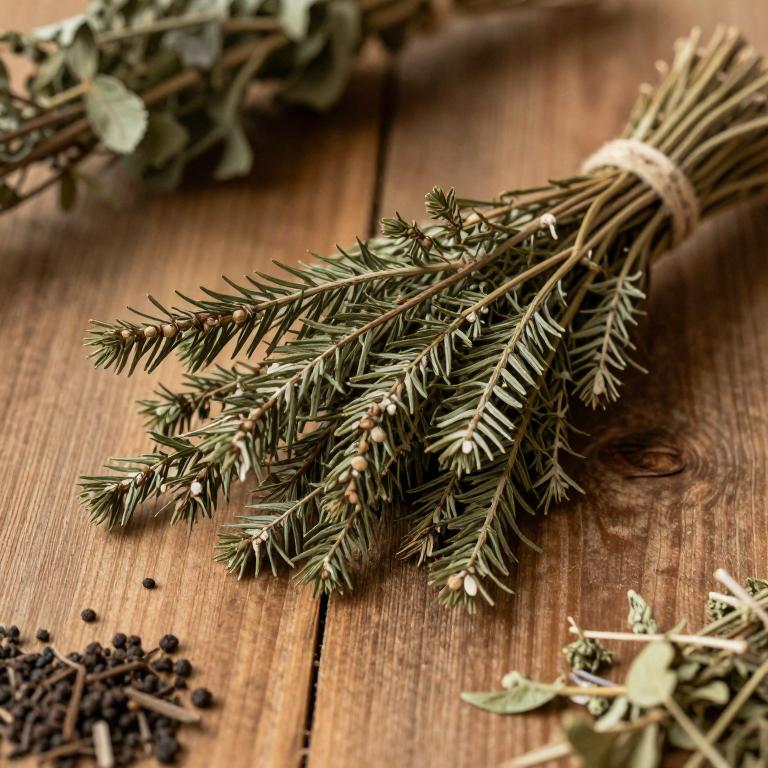
Abies amabilis, commonly known as the Tsuga or Pacific silver fir, is a majestic evergreen species native to the coastal forests of North America. This resilient conifer is highly valued for its aromatic properties and its diverse range of traditional applications. Practitioners often utilize various parts of the plant, specifically focusing on the bark for its potent medicinal qualities. These components are frequently processed into decoctions or infusions to extract their beneficial compounds. Through these specialized preparations, the plant serves as a vital resource in herbal studies and forest medicine.
- Synonyms
- Abies Grandis Var. Densifolia · Pinus Amabilis · 1 more
- Common names
- Not available
- Family
- Pinaceae
- Distribution
- Not available
- Plant Parts
- Not available
Classification
Common Names
Abies amabilis is a distinctive conifer known by many evocative names across different regions. It is most frequently recognized as the Beautiful Silver-Fir or the Pacific silver fir. Many enthusiasts also refer to this species as the Cascade Fir due to its native habitat. In some botanical circles, it is affectionately called the Lovely Fir. Additionally, it holds the unique traditional name of Purpurtanne.
Sources: Catalogue of Life (COL)
Synonyms
Abies amabilis is a species that has been classified under several different botanical names throughout history. Scientific literature identifies it by the synonym Abies grandis var. densifolia, reflecting its complex taxonomic lineage. It has also been referred to as Picea amabilis, illustrating how earlier researchers categorized its physical characteristics. Furthermore, the name Pinus amabilis has appeared in various records, showcasing the evolving nature of plant identification. Understanding these various synonyms is essential for navigating the diverse records of botanical nomenclature.
Sources: The World Checklist of Vascular Plants (WCVP)
Taxonomy
Abies amabilis belongs to the diverse kingdom Plantae, representing a vital part of the natural world. Within this vast group, it is classified under the class Equisetopsida and the order Pinales. The species is a distinguished member of the Pinaceae family, showcasing specialized evolutionary traits. It specifically resides within the genus Abies, a group known for its iconic coniferous characteristics. Through these scientific relationships, we can better understand its unique position in the botanical hierarchy.
| Rank | Classification |
|---|---|
| Kingdom | Plantae |
| Phylum | Streptophyta |
| Class | Equisetopsida |
| Subclass | Pinidae |
| Order | Pinales |
| Family | Pinaceae |
| Genus | Abies |
Sources: The World Checklist of Vascular Plants (WCVP)
Distribution
Geographic Regions
Abies amabilis maintains a diverse and expansive geographic range that spans across multiple continents. In the Eastern Hemisphere, this species is found throughout Europe, including the regions of Northern Europe and Great Britain. Its presence is equally significant across Northern America, where it thrives in the subarctic landscapes of Alaska. The tree is a staple of the Northwestern United States, specifically populating the forests of Oregon and Washington. Furthermore, its distribution extends southward into the Southwestern United States, particularly within the state of California.
Sources: The World Checklist of Vascular Plants (WCVP)
Identification
Morphology
Abies amabilis grows in the form of a stately tree that remains entirely self-supporting in its natural habitat. This robust species is capable of reaching an impressive maximum height of 50 meters. Such significant stature allows it to stand prominently within its forest ecosystem.
Sources: Global Inventory of Floras and Traits (GIFT)
Biological Activities
Compounds
Conditions
Abies amabilis is not mentioned in the provided abstracts as a treatment for any medical conditions. Although the text discusses the medicinal use of various barks by Salishan native elders, it specifically identifies Abies grandis rather than Abies amabilis. Consequently, there is no evidence in the provided documentation to support the claim that Abies amabilis treats digestive tract ailments, gynaecological problems, or respiratory ailments. The abstracts focus on a different species of fir to address these specific health concerns. Therefore, the requested relationships between Abies amabilis and these ailments cannot be verified through the given text.
Preparations
Abies amabilis is utilized by Salishan native elders through various medicinal preparations involving its bark. This specific plant material is frequently processed to create therapeutic decoctions for treating various ailments. Additionally, the bark of Abies amabilis is prepared as infusions to be consumed or used as a wash. These different methods of preparation allow the bark to serve as a versatile component in traditional medicine. Through these decoctions and infusions, the plant provides significant medicinal value to the community.