Abelmoschus rhodopetalus
Abelmoschus rhodopetalus · Accepted scientific name
Scientific literature: Very Sparse (10 studies) · ★☆☆☆☆
, scientifically known as Abelmoschus rhodopetalus, is a distinctive medicinal plant belonging to the Malvaceae family. Renowned for its unique pink-petaled blooms, this species offers significant therapeutic potential. Researchers increasingly study its bioactive compounds, which may provide valuable pharmacological benefits in treating various ailments and supporting holistic wellness.
- Family
- Malvaceae
- Native range
- Asia-Temperate
- Parts used
- Stem
- Common names
- Not available
- Scientific synonyms
- Abelmoschus Moschatus Subsp. Quinquelobus · Hibiscus Sagittifolius Var. Quinquelobus · 28 more
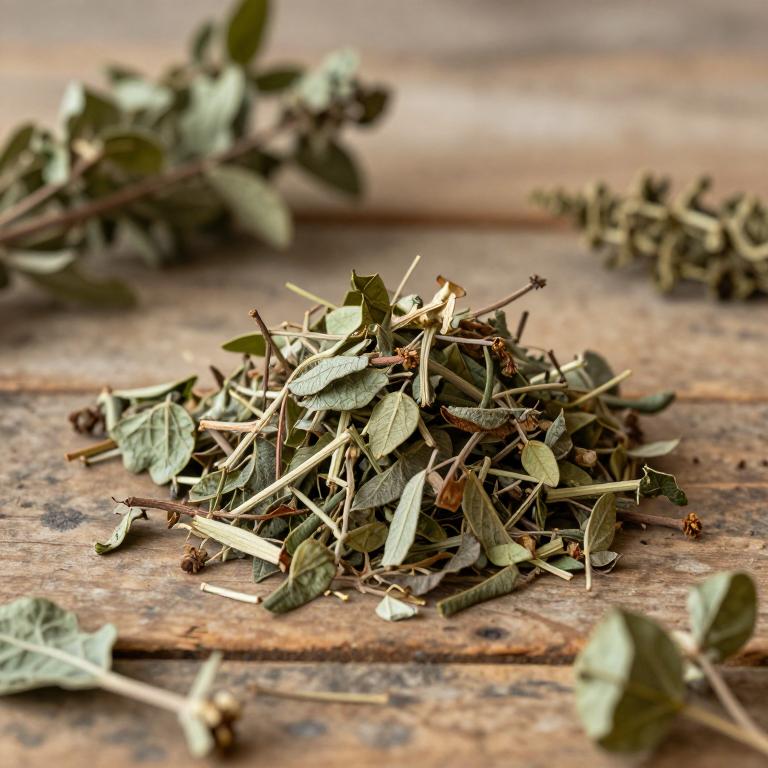
Names and Synonyms
Scientific Names
Accepted name
Abelmoschus rhodopetalusSynonyms
- Abelmoschus moschatus subsp. quinquelobus
- Hibiscus sagittifolius var. quinquelobus
- Hibiscus sagittifolius
- Hibiscus bellicorus
- Abelmoschus todayensis
- Abelmoschus vanoverberghii
- Abelmoschus moschatus var. rugosus
- Hibiscus longifolius var. tuberosus
- Abelmoschus moschatus subsp. tuberosus
- Hibiscus brevicapsulatus
- Hibiscus esquirolii
- Hibiscus todayensis
- Hibiscus subnudus
- Abelmoschus rugosus
- Hibiscus rhodopetalus
- Abelmoschus sagittifolius
- Hibiscus rhodopetalus f. angustisectus
- Abelmoschus sharpei
- Hibiscus rhodopetalus var. angustisectus
- Abelmoschus esquirolii
- Hibiscus rhodopetalus var. chillagoensis
- Abelmoschus coccineus
- Abelmoschus brevicapsulatus
- Hibiscus sharpei
- Hibiscus abelmoschus var. rugosus
- Hibiscus sagittifolius var. septentrionalis
- Hibiscus rugosus
- Hibiscus bodinieri var. brevicalyculata
- Abelmoschus coccineus var. acerifolius
- Abelmoschus sagittifolius var. septentrionalis
Sources: Wikidata
Taxonomical Classification
This plant, Abelmoschus rhodopeetalus, belongs to the kingdom Plantae within the phylum Streptophyta and the class Equisetopsida. It is further classified under the subclass Magnoliidae in the order Malvales. Finally, it is a member of the family Malvaceae and falls under the genus Abelmoschus.
| Rank | Classification |
|---|---|
| Kingdom | Plantae |
| Phylum | Streptophyta |
| Class | Equisetopsida |
| Subclass | Magnoliidae |
| Order | Malvales |
| Family | Malvaceae |
| Genus | Abelmoschus |
Sources: The World Checklist of Vascular Plants (WCVP)
Distribution
This plant is distributed across several specific regions within Asia. In China, its presence is noted in the South-Central, Southeast, and Hainan areas. Moving to the Indian Subcontinent, it can be found growing in India. Additionally, the species is documented to occur within Bangladesh. Together, these locations define the natural range of Abelmoschus rhodopephalus.
| Region | Area |
|---|---|
| China | China South-Central |
| China | Hainan |
| China | China Southeast |
| Indian Subcontinent | Bangladesh |
| Indian Subcontinent | India |
| Indo-China | Cambodia |
| Indo-China | Laos |
| Indo-China | Myanmar |
| Indo-China | Thailand |
| Indo-China | Vietnam |
Sources: The World Checklist of Vascular Plants (WCVP)
Plant Parts
Abelmoschus rhodopetalus has 1 reported plant parts identified across 1 scientific publications and several other databases that are studied for medicinal purposes. The most consistently reported plant part include stem.
| Plant part | Supporting sources | Consensus |
|---|---|---|
| Stem | 1 supporting sources | ★☆☆☆☆ |
Stem
- Natural product research
Chemicals
Abelmoschus rhodopetalus has 8 reported phytochemicals identified across 1 scientific publications and several other databases. The most consistently reported chemicals include (R)-De-O-methyllasiodiplodin, (R)-Lasiodiplodin, CYTOCHALASIN B, Cleomiscosin A, Hibiscone B.
| Chemical | Supporting sources | Consensus |
|---|---|---|
| (R)-De-O-methyllasiodiplodin | 1 supporting sources | ★☆☆☆☆ |
| (R)-Lasiodiplodin | 1 supporting sources | ★☆☆☆☆ |
| CYTOCHALASIN B | 1 supporting sources | ★☆☆☆☆ |
| Cleomiscosin A | 1 supporting sources | ★☆☆☆☆ |
| Hibiscone B | 1 supporting sources | ★☆☆☆☆ |
| Marmesinin | 1 supporting sources | ★☆☆☆☆ |
| N-(p-trans-coumaroyl) tyramine | 1 supporting sources | ★☆☆☆☆ |
| dibutyl phthalate | 1 supporting sources | ★☆☆☆☆ |
(R)-De-O-methyllasiodiplodin
- Natural product research
(R)-Lasiodiplodin
- Natural product research
CYTOCHALASIN B
- Natural product research
Cleomiscosin A
- Natural product research
Hibiscone B
- Natural product research
Marmesinin
- Natural product research
N-(p-trans-coumaroyl) tyramine
- Natural product research
dibutyl phthalate
- Natural product research
Preparations
Abelmoschus rhodopetalus has 1 reported preparations identified across 1 scientific publications and several other databases. The most consistently reported preparations include stem bark.
| Preparation | Supporting sources | Consensus |
|---|---|---|
| Stem bark | 1 supporting sources | ★☆☆☆☆ |
Stem bark
- Natural product research